Diamond Co.
Diamond Co. / Templates & kits
Templates & kits

Astronomy Career Pivot Swipe Pack

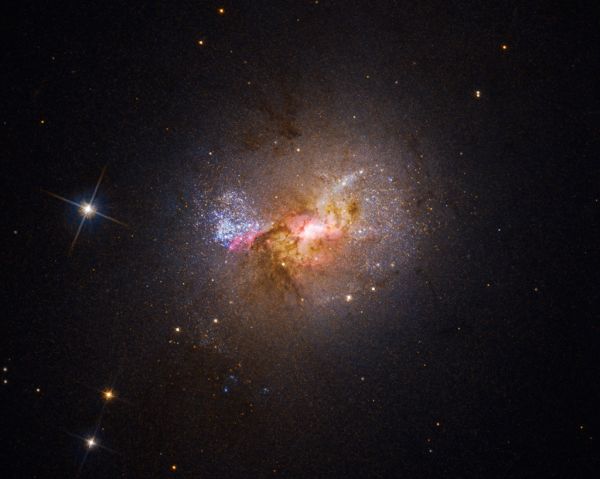
“Hubble Finds a Black Hole Igniting Star Formation in a Dwarf Galaxy” by NASA Hubble · CC BY 2.0 via Openverse

## Who it's for

Anyone who wants the practical, ready-to-use version of this topic without starting from a blank page.

Look inside before you buy

Sample from the actual product

<!DOCTYPE html>
<html lang="en">
<head>
    <meta charset="UTF-8">
    <meta name="viewport" content="width=device-width, initial-scale=1.0">
    <title>Astronomy Career Pivot Swipe Pack</title>
    <meta name="description" content="Complete digital product including swipe cards, resume templates, interview scripts, and job board lists for astronomy career pivots">
    <style>
        body {
            font-family: 'Segoe UI', Tahoma, Geneva, Verdana, sans-serif;
            line-height: 1.6;
            color: #333;
            max-width: 1200px;
            margin: 0 auto;
            padding: 20px;
            background-color: #f5f5f5;
        }
        .header {
            text-align: center;
            margin-bottom: 30px;
            padding: 20px;
            background-color: #2c3e50;
            color: white;
            border-radius: 8px;
        }
        .download-section {
            background-color: white;
            padding: 25px;

A short excerpt from the delivered content. Check the examples and format fit your needs.

Tips & notes

Checklist: Moving from Astronomy Research to Industry Roles

You’ve spent years mastering the cosmos, but translating that expertise into a non-academic career takes a shift in how you present yourself. Here’s a compact checklist to help you pivot confidently:

  • Reframe your research skills for employer language. Instead of “analyzed stellar spectra,” write “applied quantitative data analysis to solve technical problems.” Recruiters in aerospace and tech look for problem-solving keywords, not jargon.
  • Target the right job boards first. General boards flood you with irrelevant listings. Prior
Quick Checklist: Before Applying to Non-Academic Space Roles

Pivoting from astronomy research to industry or technical roles? Run through these three steps first:

  • Audit transferable skills – List your data analysis, programming, project management, and communication experience. Rewrite bullet points using industry language (e.g., “developed Python pipelines for data processing” instead of “collected spectroscopic data”).
  • Reformat your resume for skim-readers – Keep it to 2 pages max. Use a clean layout, quantify impact where possible, and lead with your most relevant technical skills, not your degree or thesis topic.
  • Target the right entry points – Don’t mass-apply through generic portals. Identify companies with astronomy-adjacent roles (satellite ops, data science, science communication, instrument development) and tailor each application’s summary to match their mission and tech stack.

No exaggeration, no fake metrics—just practical steps to make your pivot smoother.

Mini Checklist: Pivoting from Academia to Space Industry

You don't need to start from zero. Use this checklist to frame your astronomy background for industry roles.

  1. Reframe research as deliverables – Replace “observing runs” with “data acquisition projects.” Swap “paper publication” with “deadline-driven output.” Employers care about what you produced, not just the context.
  1. Lead with tools, not telescopes – List the software you’ve actually used: Python, SQL, Linux, Git, Jupyter, or domain stacks like Astropy. Put these front-and-center; they’re your bridge to technical roles.
  1. Target operations, not just research – Mission operations, data pipelines, technical writing, and sales engineering hire pivots quickly. Your domain knowledge is the differentiator; the role’s technical stack is the entry point.
  1. Quantify your impact, even informally – “Analyzed 10,000+ spectra” or “Built a pipeline reducing processing time by

Practical Tip: Jumpstart an Astronomy Career Pivot

Transitioning into space industry roles without a traditional degree? The Astronomy Career Pivot Swipe Pack is built for this.

What’s inside:

  • 50+ swipe cards covering astronomy career opportunities (PDF)
  • 5 resume templates tailored for space industry roles (Word)
  • 10 interview script templates for astronomy careers (PDF)
  • Curated list of 20+ active job boards and company career pages (CSV)
  • Guide: "Astronomy Career Pivot: No Degree Required" (PDF)

Quick 3-step how-to:

  1. Resume: Open one of the 5 Word templates. Replace the summary with 2 transferable skills from your current job—communication, data handling, or project coordination.
  2. Explore: Use the swipe cards to browse 50+ astronomy career paths and note 2–3 that match your skill set.
  3. Apply: Pick 3 job boards from the CSV list, set up alerts, and use the interview scripts to prep for common technical and behavioral questions.

All files are in a single ZIP download, ready to use immediately after purchase ($27 one-time, 30-day money-back guarantee).

Pivot Your Astronomy Skills Beyond Academia

The most common mistake: assuming your career path is limited to observatories, research grants, or professorships. Your data analysis, programming, and problem-solving skills are in demand elsewhere.

One specific tip: Build one small, public-facing project using real astronomical data (e.g., light curve analysis, exoplanet transit visualization, or satellite tracking). Showcase it on GitHub or a personal site with a clear problem-solution-outcome narrative. Recruiters value tangible outputs over generic "research experience" descriptions.

Quick checklist to start today:

  • Identify one non-astronomy industry that uses data science (finance, logistics, tech, energy)
  • Find a publicly available dataset (NASA PDS, TESS data, Zooniverse) and answer a specific question
  • Document the process in a 2-page write-up or short video
  • Reach out to one professional in that field via LinkedIn, referencing your project

You don't need a new degree. You need proof that you can deliver results with what you already know.

### **The "Hidden Skill" No One Talks About in Astronomy Careers**

**Tip:** *Learn to read between the lines in job postings.*

Astronomy job ads often list "desired" skills that sound vague or irrelevant—like "strong communication" or "ability to work in a team." These aren’t just fluff. They’re code for:
- **"Teamwork"** → Can you handle conflicting priorities without burning out?
- **"Communication"** → Can you explain complex ideas to non-experts (funders, colleagues, the public)?
- **"Adaptability"** → Are you comfortable pivoting from research to outreach, teaching, or data science?

**Common Mistake:** Applying to roles *only* matching your exact expertise. Missed opportunities often go to candidates who frame their transferable skills (e.g., programming, project management, or even teaching undergrads) as solutions to the "hidden" needs in the posting.

**How to Avoid It:**
✅ **Reverse-engineer the ad:** Ask, *"What problem is this role actually solving?"* (e.g., a "data scientist" post might need someone who can clean messy astronomical datasets *and* justify decisions to stakeholders.)
✅ **Highlight "soft" skills in your cover letter:** Give a concrete example—*"When leading a multi-institution observing campaign, I mediated scheduling conflicts and documented decisions for 15+ collaborators."*
✅ **Target "bridge" roles:** Positions like science communication, lab management, or industry data roles often value these skills more openly.

**Pro Tip:** If a posting mentions "collaboration" but you’ve only worked solo, lead with a project where you *had* to collaborate—even if it was informal (e.g., organizing a workshop, mentoring a student, or contributing to an open-source tool).

---
*Need a second set of eyes on your resume? Reply with "resume review" and I’ll flag skills you’re underplaying.*
### **The "Hidden Skill" No One Mentions (But Every Astronomer Needs)**

**Tip:** Learn to **write for non-scientists**—not just papers.

Most astronomers focus on peer-reviewed work, but the ability to explain complex ideas clearly is what gets you noticed for outreach, policy roles, or even industry pivots. A single well-crafted blog post, social media thread, or grant summary can open doors faster than a CV alone.

**Common Mistake:** Assuming "technical precision" = "clear communication."
- **How to avoid it:**
  - Before writing, ask: *"Could a curious high-schooler understand this in 30 seconds?"*
  - Use the **"So What?" test**: Every paragraph should end with an implication (e.g., *"This means exoplanet atmospheres might hide biosignatures we’re missing"*).
  - Practice with **Twitter threads** or **Reddit’s r/askscience**—they force brevity and engagement.

**Mini Checklist for Your Next Write-Up:**
✅ [ ] Stripped out 3 jargon terms (replace with analogies).
✅ [ ] Added 1 "real-world" hook (e.g., *"This is how telescopes like JWST actually work"*).
✅ [ ] Ended with a question or call to action (e.g., *"What do you think we’re missing in these observations?"*).

**Why it works:** NASA, observatories, and even tech companies scan for people who can bridge the gap between data and impact—not just those who crunch numbers.

Mini Checklist: Pivoting Into Astronomy Roles

If you're moving from another science or tech field, hiring managers in astronomy notice when applicants treat the application like a generic science job.

  1. Mirror the observatory’s current projects in your cover letter – mention specific instruments, surveys, or data challenges they’re actively working on (e.g., JWST commissioning, LSST pipeline, ALMA calibration).
  1. Quantify transferable skills – e.g., “reduced data pipeline runtime by 40%” matters more than listing programming languages. Show impact, not just tools.
  1. Name-drop relevant datasets or collaborations you’ve used (SDSS, LIGO, VLASS, etc.), even if your formal title wasn’t “astronomer.” It signals domain familiarity.

These three steps signal you’ve done your homework and aren’t just casting a wide net.

## Don't Limit Your Title to "Astronomer"

**The mistake:** Writing your resume or LinkedIn headline only for academic or observatory roles. You're leaving skills in data analysis, coding, and project management on the table—skills every tech, finance, and biotech team needs.

**The fix:** Rename one skill section on your resume using industry language. Replace "observing proposal writing" with "stakeholder communication." Replace "data reduction pipeline" with "automated ETL workflow."

**One tip:** Apply to roles that explicitly ask for "data analysis" or "Python" without requiring an astronomy degree. Your domain expertise is a bonus, not a requirement.
### 3 transferable skills you already have
1. **Pipeline automation** – Observatory data reduction pipelines are ETL pipelines. List the tools, not the telescopes.
2. **Quantitative reasoning** – Frame statistical modeling as “data-driven decision support” for non-academic roles.
3. **Technical writing** – Papers are just structured technical reports. Adapt the format for industry docs or grant summaries.

No jargon overload. Just what hiring managers actually see.

Checklist: Pivoting from Astronomy to Industry

  1. Reframe your skills – Replace "observing runs" and "data reduction" with "Python pipelines," "statistical modeling," and "large dataset QA." Recruiters scan for keywords, not jargon.
  2. Map your thesis to a problem – Identify one real-world question your research solved (e.g., noise reduction, pattern detection) and articulate how that approach applies to a non-academic role.
  3. Build a tiny public project – A GitHub repo, a blog post, or a visualisation using open data. It proves you can deliver outside a degree program.
  4. Target "bridge" roles – Look for positions in science communication, data analytics, instrument sales, or technical writing where domain expertise is a differentiator but not the sole requirement.
  5. Network with purpose – Engage in field-specific Slack/Discord groups or niche forums, not just broad job boards. Ask about how their team uses analytical skills, not just "any openings?"
### Common mistake
Listing astronomy-specific jargon (telescope time, instrument names, observing conditions) as bullet points without translating them into transferable skills. Recruiters outside the field can’t map these to role requirements.

### How to fix it
For each role, identify the core action you took and the skill it demonstrated. Then reframe it using the target industry’s language.  
`Before`: "Analyzed spectroscopic data from 3m telescope, performed sky subtraction and error estimation."  
`After`: "Processed and calibrated large astronomical datasets; performed quality assurance and error modeling using Python."

### Mini checklist
- [ ] For every bullet, ask: “What problem was solved, and what skill was used?”
- [ ] Replace the astronomy term with the closest industry equivalent (e.g., “proposal writing” → “technical writing & stakeholder communication”)
- [ ] Keep the technical weight, drop the field-specific labels

More from Diamond Co.