Diamond Co.
Diamond Co. / Templates & kits
Templates & kits

First‑Week Middle School Math Teacher Kit

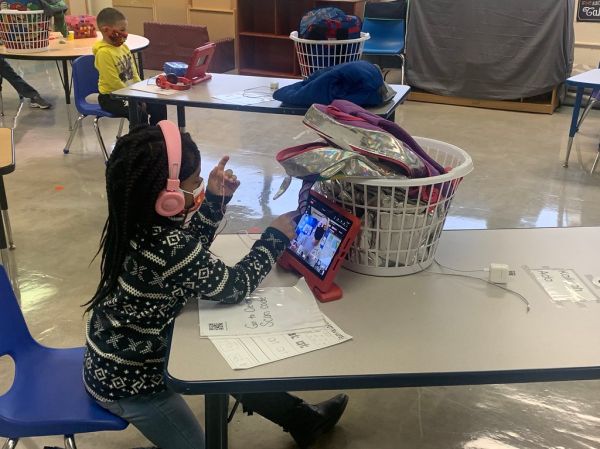
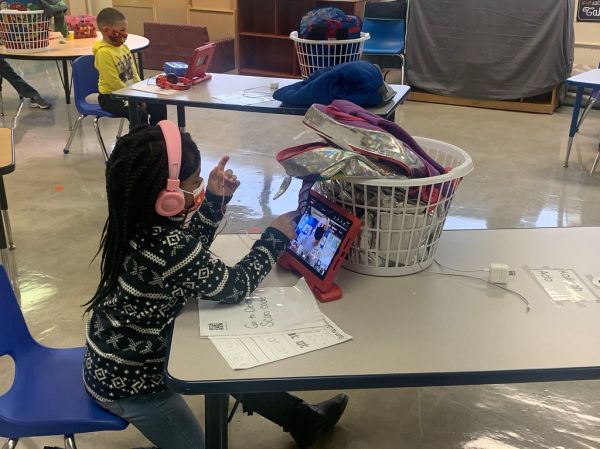
“K & 1 First Week Back” by Orange Co Schools · CC PDM 1.0 via Openverse

A ready-to-use collection of lesson plans, worksheets, and answer keys designed to help middle school math teachers start the school year with confidence and clarity.

What’s Inside

  • Three detailed lesson plans covering foundational middle school math topics
  • Printable worksheets for classroom practice
  • Answer keys with step‑by‑step solutions
  • Quick‑start guide for planning the first five days

Look inside before you buy

Inside the product

  • Product Overview
  • Detailed Contents
  • Lesson Breakdown
  • Sample Downloads
  • Differentiation & Accessibility
  • Getting Started Guide (First-Week Implementation)
  • Day 1 – Prepare Your Classroom
  • Day 2 – Deliver Lesson 1

Sample from the actual product


**Venture ID:** d475e4d0-b28b-4052-b7c9-2470a973cdd4
**Stage:** ACTIVE
**Task ID:** 15ae4c58-d3a9-4274-adde-6dea7b92ca87

---

## Product Overview
**Price:** $39 (USD)
**Channel:** Direct sale via owned website
**Distribution:**
- Purchase triggers an email with a secure download link.
- ZIP file contains:
  - **5 Lesson Plans** (PDF, editable Word & Google Docs)
  - **15 Worksheets** (PDF, aligned to each lesson)
  - **Answer Keys** (print-ready PDF)
  - **Engagement Activity:** *Ratio Relay Game* (PDF, printable cards & instructions)
- Link remains active for **30 days**; re-downloads allowed within that period.

**Licensing & Support**
- **Single-teacher license** – purchase permits use by one educator in their classroom(s).
- **Technical support:** Email support@yourshop.com; response within 24 hours for broken links, missing files, or formatting issues.
- **Refund policy:** 30-day money-back guarantee if files are corrupted, incomplete, or not as described.

---

A short excerpt from the delivered content. Check the examples and format fit your needs.

Tips & notes

Day‑One Math Routine That Actually Sticks

Tip: Start with a 90‑second “math talk” prompt instead of reviewing the syllabus. Ask: “What’s a number or shape you’ve seen this week, and where?” It gets students noticing math in their world and gives you instant insight into their prior knowledge.

Common mistake: Passing out textbooks or worksheets on day one without establishing why the math matters. Students tune out when math feels like a chore before they’ve seen its purpose.

How to avoid it: Keep the first 10 minutes student‑focused and curiosity‑driven. Save procedures and expectations for after the spark. You’ll have more attention, and students will frame the upcoming rules as tools for the math they actually care about.

Quick checklist:

  • Choose one open‑ended math prompt
  • Prepare a minimal visual (number line, shape set, or quick sketch)
  • Set a timer so the talk stays under 5 minutes
  • Note one thing each student shares for your planning
First-Week Math Teacher Checklist

Keep it simple. Use these three low‑prep actions to start strong:

  1. “Math About Me” – Ask students to choose a number, shape, or pattern that reflects something about them. Share briefly. It personalizes math without a lecture.
  2. Routine in 3 minutes – Demonstrate how to enter, get materials, and submit work. Keep it under three minutes the first time; consistency matters more than detail.
  3. Estimate of the Day – Post a simple visual or question (“About how many tiles are on this floor?”). Students write a guess and reasoning. Zero prep, builds number sense.

Mistake to avoid: Don’t spend the entire period reviewing rules. Students engage more when they do math within the first hour.

First-Day Math Prep: 3 Things to Avoid

  1. Don't hand out textbooks before establishing norms.

Pass out materials after you've modeled how to use them. Otherwise, students treat them as toys or ignore the content entirely.

  1. Don't skip the "why" of math practices.

Instead of just listing procedures, connect one skill to a real-world question students care about. It signals that math is about sense‑making, not just answers.

  1. Don't assume prior knowledge is uniform.

Start with a quick, low‑stakes "math about me" prompt. It reveals gaps without pressure and gives you immediate diagnostic data.

Save the detailed syllabus review for day 2 or 3. The first 40 minutes set the tone for the whole year.

First-Week Mini Checklist: 5 Routines That Bring Math Norms to Life

Day 1–5, keep each to 5–10 minutes. These routines build expectations and mathematical thinking without consuming your whole class period.

  1. Intentional Mistake – Post one worked problem with a deliberate error. Ask “Find it and fix it.” Models that revisions are part of learning.
  2. Quick Number Talk – One estimation or computation. Give 90 seconds of individual think time, then a quick share. Proves that everyone’s mathematical voice matters.
  3. Which One Doesn’t Belong? – Show four numbers, graphs, or shapes. Ask “Which one? Why?” Emphasize that multiple answers are valid if the reasoning is sound.
  4. One-Word Math Reflection – On an index card, students write one word describing their math identity. Keep cards. Return them Friday so students see growth.
  5. Material Routine with Math – Demonstrate how to get/distribute supplies, but do it while estimating lengths, counting items, or measuring a desk. Transitions become math moments.

No gimmicks. Just consistent, low-stakes experiences that signal: “We do math thinking every day.”

Start with a “Notice & Wonder” routine, not a rule list

Common mistake: Reviewing the syllabus and class rules on day one. Students hear “don’t do this” all day, and you lose the chance to show what mathematical thinking looks like.

How to avoid it: Open class with a single, low-floor high-ceiling prompt—like a visual pattern, a number puzzle, or a short word problem—and ask “What do you notice? What do you wonder?” for 5 minutes. It signals that your class is about curiosity and sense-making before anything else.

3 Things to Check Before the Bell Rings (Day 1)

  1. Seating & Materials

Arrange desks so you can quickly scan who has a pencil, notebook, and calculator. Keep a “loaner” station for forgotten supplies—it prevents 5-minute delays later.

  1. Bell-Ringer Routine

Post a single, predictable problem on the board as students enter. Keep it math-review or a “number of the day” to settle the class and start math thinking immediately.

  1. Expectations, Not Rules

State one clear math-class norm: “Ask yourself: Does this answer make sense before I raise my hand?” Phrase it positively so it guides behavior without feeling restrictive.

No handouts needed. Just these three anchors and you’re set for a smoother first week.

First‑Week Middle School Math Routine Checklist

Day 1: Stand at the door. Students grab a “math prompt” card, work silently for 3 minutes. No syllabus reading.

Day 2: Model how to set up notebook space. Students copy the date/title format. Practice in 2 minutes.

Day 3: Ask one student to model the routine. If it’s smooth, you’ve saved time all week.

Common mistake: Explaining expectations instead of letting students practice them. Talk is cheap; repetition builds routine.

How to avoid it: Dedicate the first 5 minutes of each day to practicing one routine (entering, getting supplies, starting work) until it’s automatic, then move to math.

Quick tip: Keep a visible “Math Starter” slide every day. Students know exactly what to do the moment they sit down.

Don’t Skip the “Math Autograph” Moment

A common mistake in the first week is assuming every student walks in with the same comfort level with basic operations or problem‑solving language. When you jump straight into the curriculum, gaps go unnoticed until a quiz or project stalls.

How to avoid it: Spend 10 minutes on a low‑stakes “math autograph.” Ask students to anonymously write one math skill they feel confident about and one they’re shaky on—on a slip of paper or a quick digital pad. Spot the trends, not individual names. Use that insight to tweak scaffolding for the week ahead, not as a grade.

The goal isn’t more data; it’s a faster, more targeted start‑up for your students.

First-Week Math Routine Checklist

  1. Ask before you teach. Pose a short, unfamiliar problem on the board and ask “What do you notice? What could we figure out?” before sharing any steps.
  2. Name the method, don’t just memorize it. When students share a strategy, have them label it in their own words first, then connect it to the standard term.
  3. Keep the first problem low-floor, high-ceiling. Choose a task every student can enter, but that allows multiple solution paths.

Why it works: Starting with sense-making rather than procedure sets a classroom culture where students think mathematically from Day 1.

Day-one math identity check-in

Give students 5 minutes to answer three quick prompts:

  1. A math memory they remember
  2. One thing they wonder about numbers or shapes
  3. A word that describes how they feel about math

Keep the responses private or use them to group students for differentiated tasks. You’ll see who feels confident, who feels left out, and where to scaffold from the first day. It’s also your first informal writing sample for the year — no prep beyond printing the prompts.

A First-Day Math Routine

Place a "Math Question of the Day" on the board before students arrive. Keep it simple: "Name a number that describes something about your morning, and one reason why." As students settle, invite 2–3 to share. Use one response to transition into today's lesson topic. It takes under five minutes, establishes a math-speaking environment, and gives you quick insight into student thinking.

This routine is one of the ready-to-use ideas included in the First-Week Middle School Math Teacher Kit.

More from Diamond Co.